Space Runner 3D
Head-tracked rail shooter
3D head-tracked rail shooter. Monitor as a window.
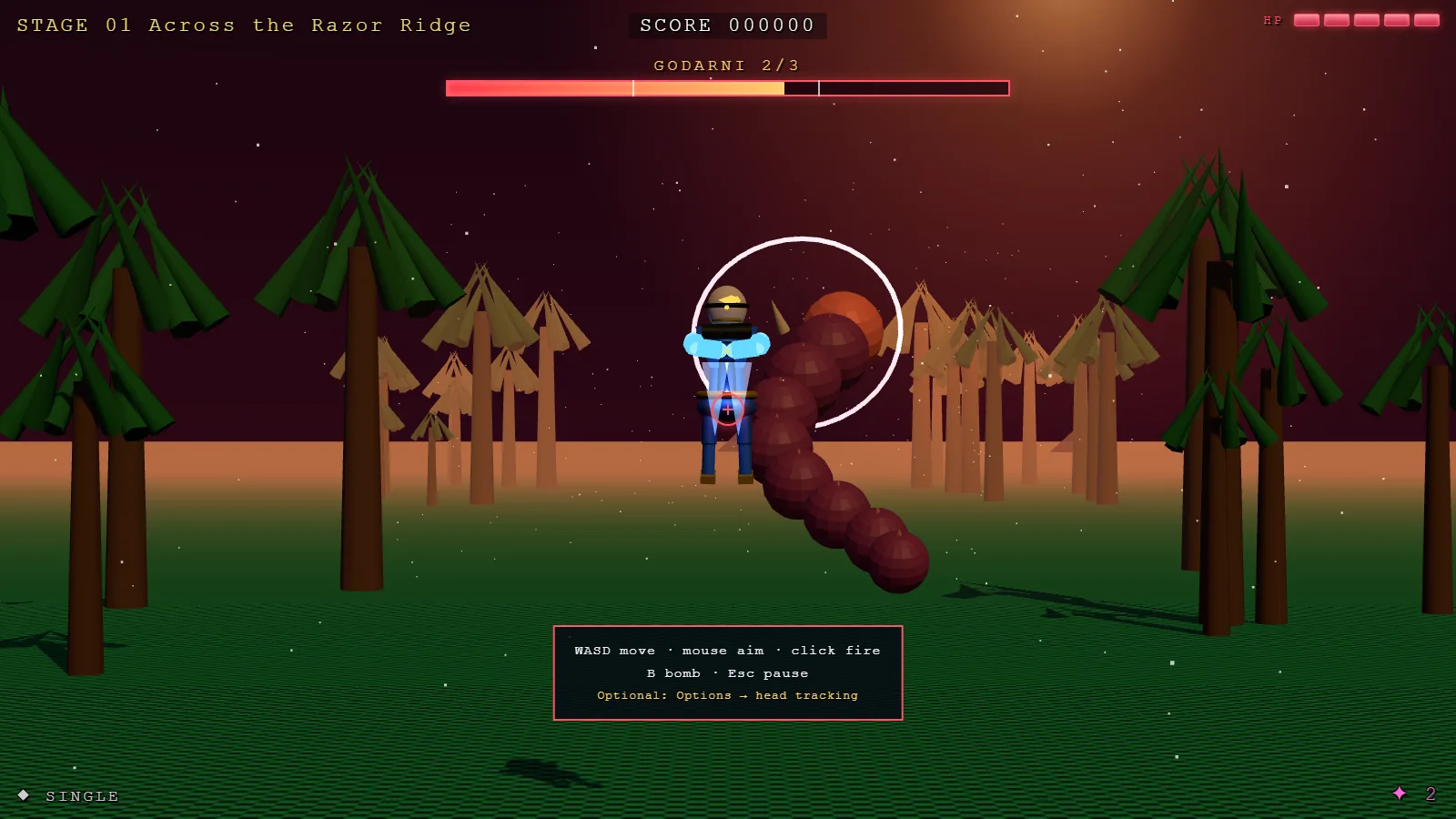
A rail shooter in the 1985 arcade lineage — flying player figure, scrolling checkered ground, enemy waves, bosses, scoring — with original geometry and original audio. Twenty-four stages with their own palettes and rosters, a parallax horizon of drifting ridgelines behind every one of them, and a stage editor with browser-local saves. Enemies lead their shots at where you're going rather than where you are, fly squad maneuvers — weave, flank, a telegraphed dive — on top of their own behaviour, and bosses shift tactics at two health thresholds with a held-fire, flared tell so the change reads as a fight changing shape rather than random noise. Easy Mode is a real off-ramp, not a cosmetic toggle, and low/medium/high quality tiers keep it running on a phone.
The monitor is a window
The webcam tracks your head and the scene is re-projected with off-axis projection based on where your head actually is. The screen stops behaving like a flat picture and starts behaving like a hole in the wall: lean left and you see around the right edge of what is in front of you. Close one eye and the depth illusion locks in hard. It is the display layer, not a shader — the geometry is genuinely being redrawn for your viewpoint, with screen shake applied after that projection so a hit never corrupts the window illusion. If you would rather not sit in front of a camera, an auto-orbit cinematic mode gives you the same parallax on a timer. Underneath it, every enemy, obstacle and boss now shares cached geometry and materials instead of minting its own, and every actor's shaders compile once at load instead of stalling the first wave — the difference between a game that stutters the moment it gets busy and one that doesn't.
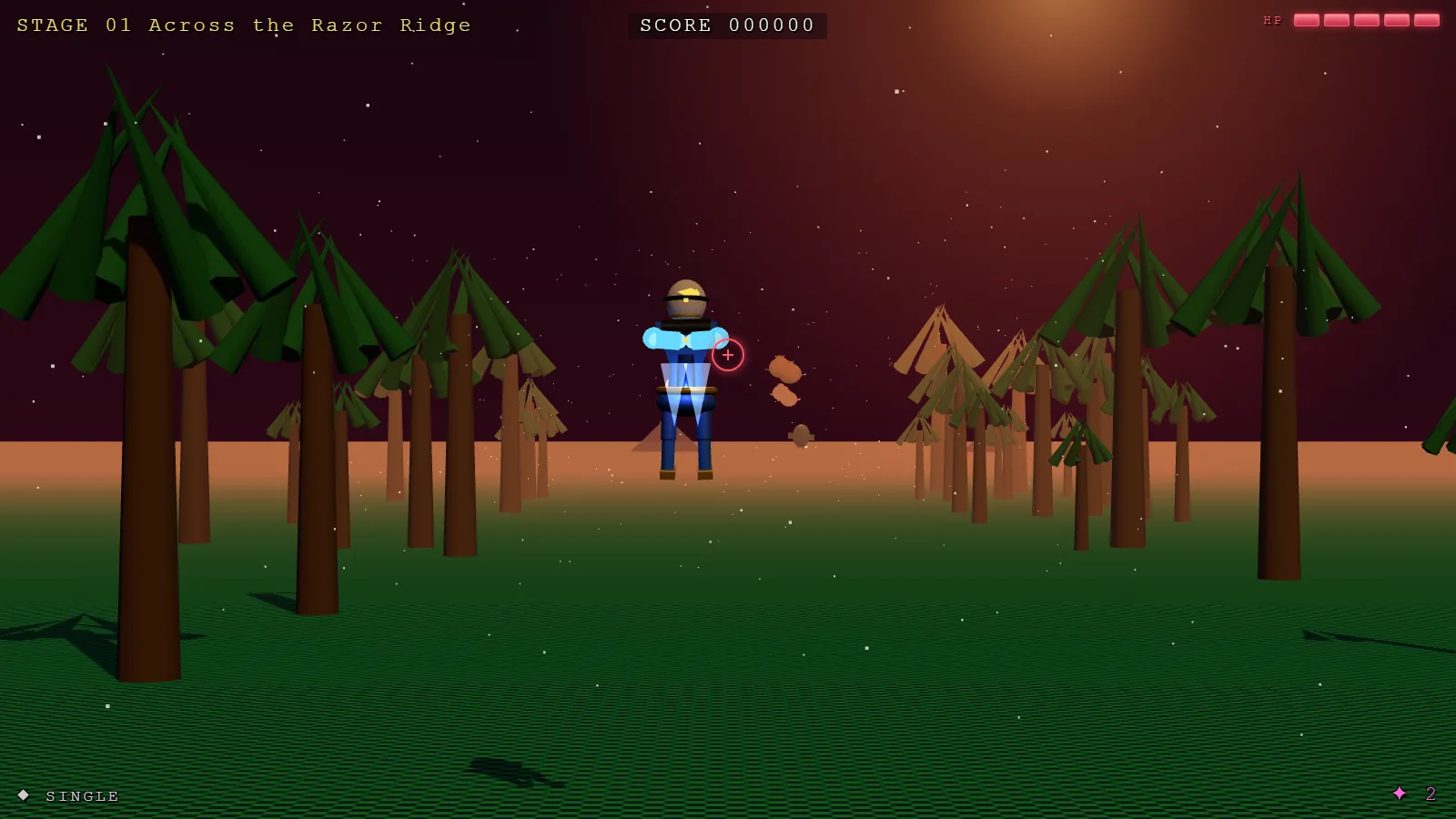
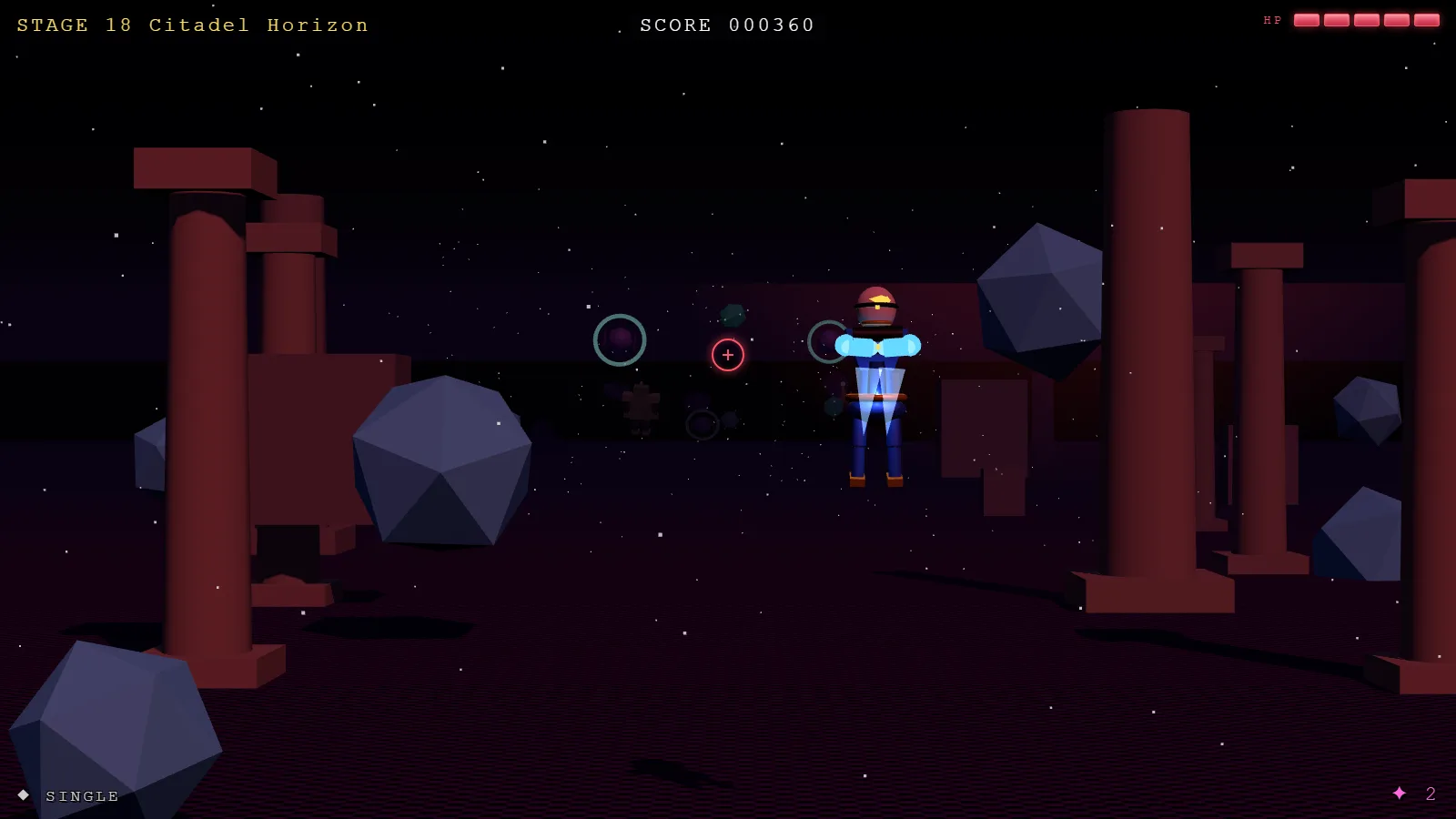
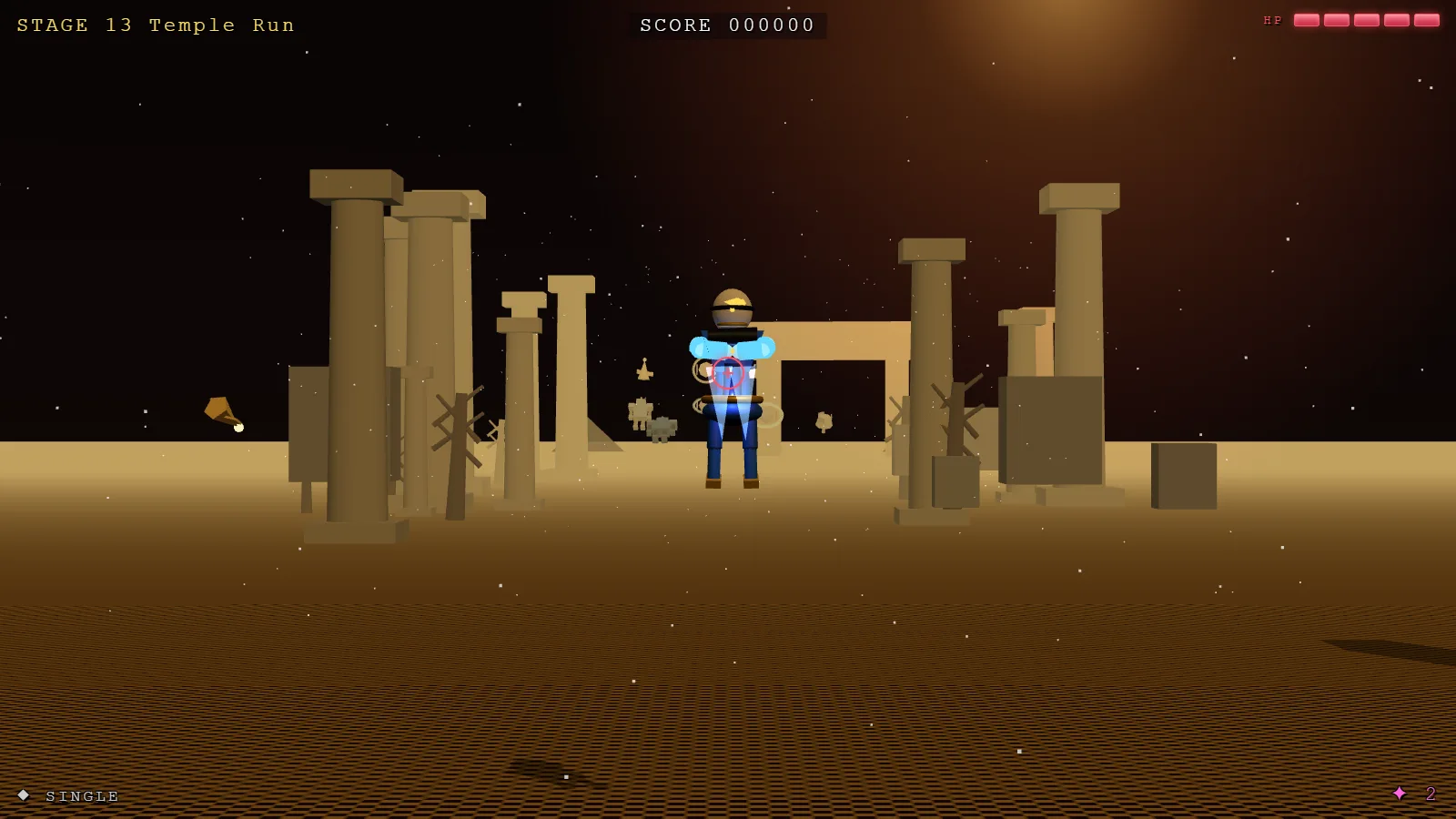
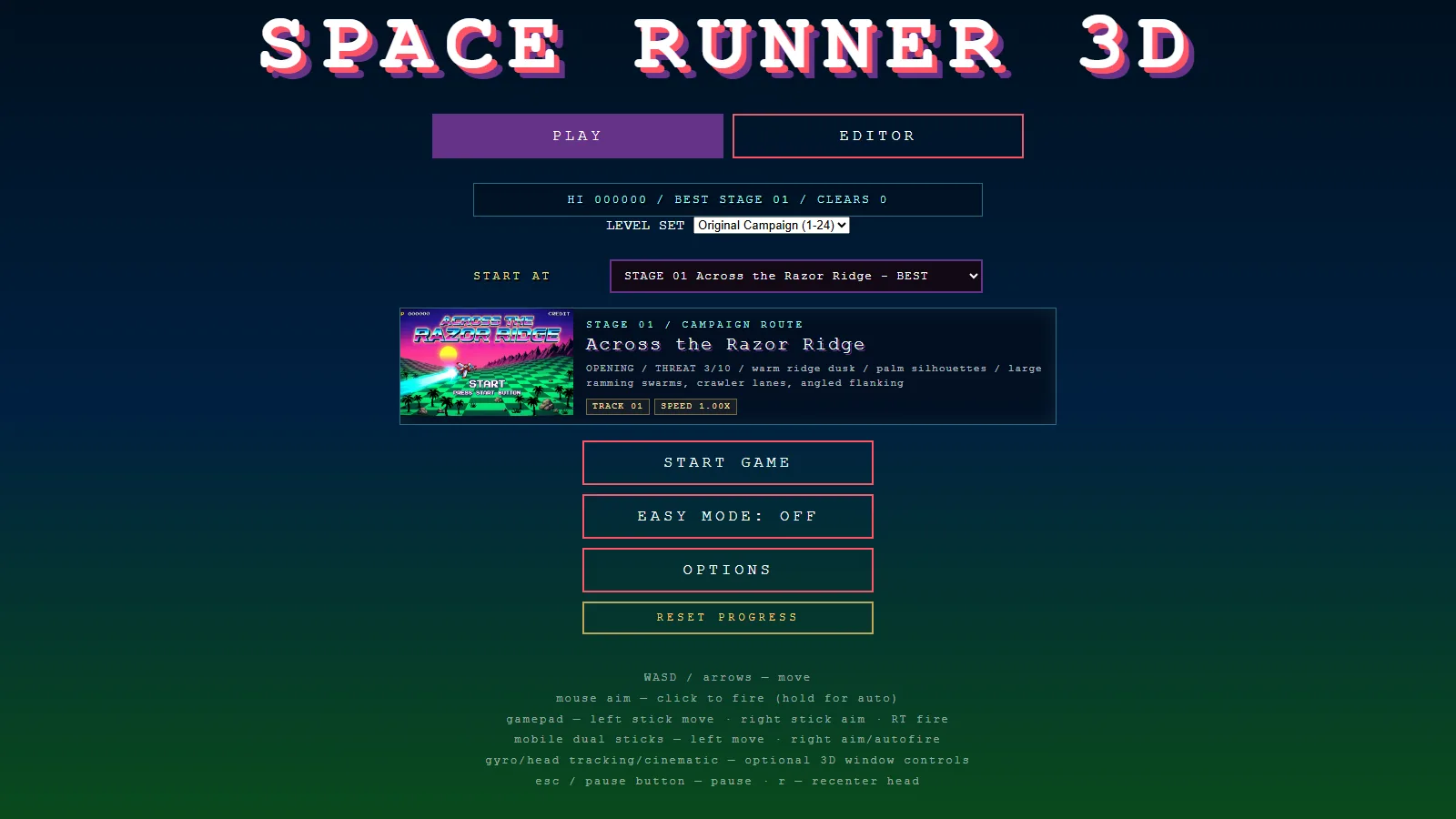
Head tracking asks for the webcam and needs HTTPS — the camera feed stays on your machine. Decline it and the game still plays; turn on cinematic mode in Options for the parallax without a camera. Easy Mode softens shot-leading and skips the harder squad maneuvers — a real second difficulty, not a label.
Two games, built to learn
How it got built →
Runs in the browser on its own host. Nothing to install.